


If your furnace gives up the ghost, the first things to check are always your thermostat, power supply, and air filter. I know it sounds basic, but you’d be surprised how many “broken furnace” calls I’ve seen over the years that were solved with one of these three simple checks. They take just a few minutes and can save you a service call fee.
Your First Five Checks When the Heat Goes Out
When your furnace quits on a freezing Big Bear night, the instinct is to panic and call for emergency service right away. Before you grab the phone, take a deep breath. Running through a few quick and safe diagnostics yourself can often get the heat back on.
This isn’t about pulling out a toolbox and getting into complex repairs. It’s more like detective work—a simple checklist to rule out the most common culprits before you assume the worst.
The Obvious but Overlooked Thermostat
Start with the brain of your entire heating system: the thermostat. If it’s not sending the right signals, your furnace is just sitting there waiting for instructions that will never come.
- Confirm the Mode: First, make sure it’s switched to “HEAT.” It’s incredibly easy for this setting to get bumped to “COOL” or “OFF,” especially in a busy household or a vacation rental.
- Check the Temperature: Is the set temperature at least a few degrees higher than the current room temperature? If it’s set to 68°F and the room is already 70°F, the furnace has no reason to kick on.
- Inspect the Batteries: For thermostats that aren’t hardwired, a blank screen or a flashing battery icon is a dead giveaway. Pop in some fresh batteries—it’s often the easiest fix in the book.
If you hear the thermostat click but the furnace still won’t fire up, that points to a different problem. We have a whole guide on what to do when your thermostat clicks but your furnace doesn’t turn on that can walk you through it.
Verifying Power and Breakers
Even a gas furnace needs electricity to run its fans, controls, and safety features. No power, no heat.
First, look for the furnace power switch. It usually looks just like a light switch and is mounted on the side of the furnace unit or on a nearby wall. Make sure it hasn’t been accidentally flipped to the “OFF” position.
Next, head over to your home’s main electrical panel. Look for a tripped circuit breaker labeled “Furnace,” “HVAC,” or “Air Handler.” Sometimes another appliance on the same circuit can cause it to trip, cutting power to your furnace without you realizing it.
This flowchart gives you a simple visual path to follow for these initial checks.
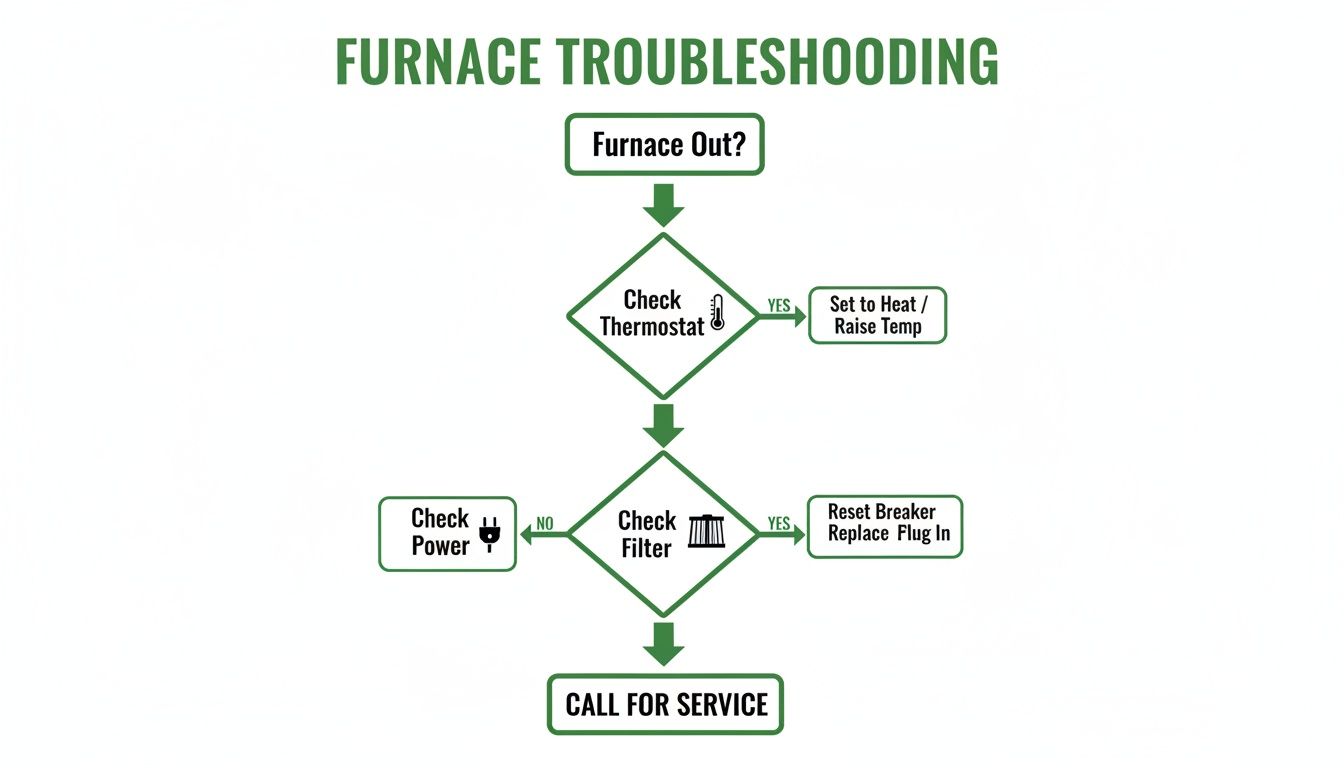
As you can see, a methodical approach of checking the thermostat, then power, then the filter, can solve a huge number of common heating problems before you ever need to call a technician.
To help you keep track, here’s a quick table summarizing these initial safe checks.
Quick Furnace Troubleshooting Checklist
| Check Point | What to Look For | Simple Fix |
|---|---|---|
| Thermostat | Is it set to “HEAT”? Is the temp setting higher than the room temp? | Adjust mode and temperature settings. |
| Thermostat Batteries | Is the screen blank or showing a low battery icon? | Replace the batteries. |
| Furnace Power Switch | Is the switch near the furnace in the “ON” position? | Flip the switch to “ON”. |
| Circuit Breaker | Is the breaker for the furnace tripped in the electrical panel? | Reset the breaker (flip fully off, then back on). |
| Air Filter | Is the filter visibly dirty and clogged with dust? | Replace with a new, clean filter. |
Working through this checklist ensures you’ve covered all the common, simple issues first.
The Clogged Air Filter Problem
Finally, pull out your furnace filter and take a look. A severely clogged filter is like trying to breathe through a pillow—it chokes off the airflow.
When a furnace can’t get enough air, it can overheat and trigger a safety sensor that shuts the whole system down to prevent damage. This is a very common issue, especially with older systems. In fact, aging equipment is the top cause of furnace failure, responsible for 34% of unplanned downtime.
If you hold your filter up to a light and can’t see the light through it, it’s long past time for a replacement. Swap it out for a clean one and see if that brings your furnace back to life.
Decoding Your Furnace’s Warning Signs
If the quick checks didn’t get the heat flowing again, it’s time to play detective. Your furnace often sends out distress signals—strange sounds, weird smells, or odd behaviors—long before it gives up completely. Learning to recognize these clues can tell you a lot and helps a technician figure out the problem way faster when they arrive.
Think of yourself as a furnace investigator. You’re not trying to fix the complex stuff right now, just gathering the evidence so you can make an informed call.
Translating Strange Furnace Noises
Weird noises are probably the most common red flag that something’s wrong inside your furnace. Ignoring them is like putting a piece of tape over your car’s check engine light; it doesn’t make the problem go away. Different sounds point to different culprits.
- Loud Banging or Booming: This usually happens right as the furnace kicks on. It often points to dirty burners, which cause a delay in ignition. That delay allows gas to build up, and when it finally lights, you get a mini-explosion inside the unit. This is a serious problem that needs a pro’s attention right away.
- High-Pitched Whistling or Squealing: This is a classic symptom of a blower motor in distress. It could be a worn-out belt slipping or, more seriously, failing motor bearings. Either way, that sound is a cry for help from a part that’s under a lot of strain.
- Grinding or Scraping: A harsh, metallic grinding noise is a stop-everything-right-now kind of problem. This almost always means the motor’s ball bearings are shot, and metal is grinding against metal. If you hear this, shut the furnace off immediately at the main power switch to prevent catastrophic—and expensive—damage.
Your furnace should run with a steady, low hum. Any sudden, loud, or repetitive noise that’s out of the ordinary is the system’s way of telling you it needs help. Don’t tune it out.
Other Telltale Symptoms
Beyond just noises, your furnace can act out in other ways that signal trouble. Paying attention to these patterns gives you a clearer picture of what’s going on.
Is your furnace short-cycling? That’s when it fires up, runs for just a minute or two, shuts off, and then repeats the process over and over. This can be caused by something as simple as a clogged filter making the system overheat, but it could also point to a bad thermostat or even a furnace that’s too big for your house.
Another common complaint is a furnace that runs constantly but only blows cool or lukewarm air. This could be anything from a faulty flame sensor to an issue with the gas supply or ignitor. The furnace is trying to do its job, but a key part of the heating process is failing. By noting these specific behaviors, you’re not just saying “my furnace is broken”—you’re giving a technician a detailed report that helps them get straight to the root cause.
Red Flags That Demand an Immediate Professional Call
While you can handle many furnace hiccups with a little DIY troubleshooting, some situations are absolute, non-negotiable emergencies. These are the red flags that mean you need to stop what you’re doing, get everyone to safety, and call a certified professional right away. Knowing the difference between a simple fix and a serious hazard is the most important skill you can have.
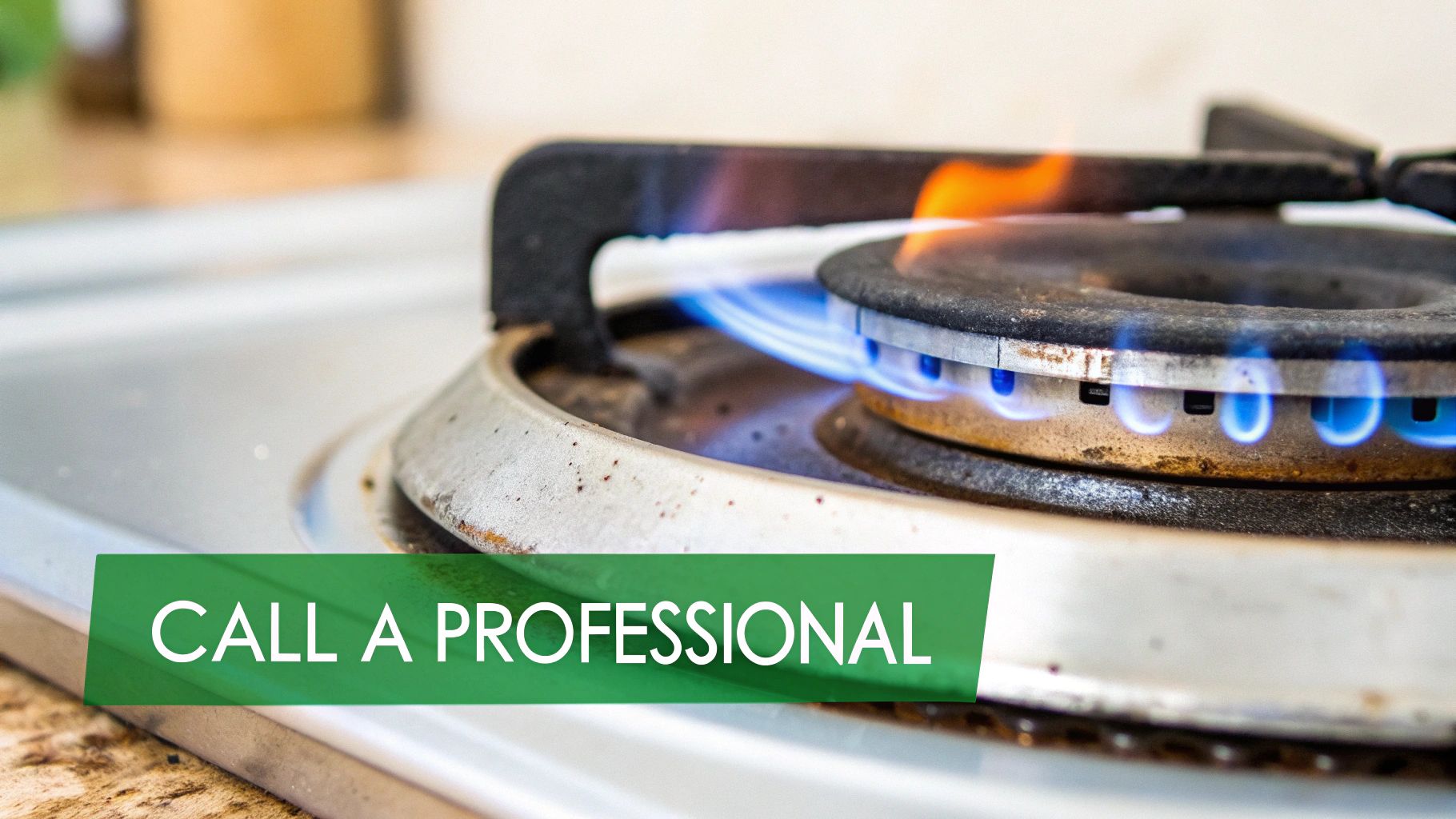
The most urgent warning of all is the unmistakable smell of natural gas, which most people describe as rotten eggs or sulfur. If you catch a whiff of this, don’t touch any light switches, unplug anything, or use your phone inside. Immediately get everyone out of the house. From a safe distance, call your gas company first, then an HVAC professional. For more on this, read our guide on why your furnace might smell like gas.
Visual and Auditory Danger Signs
Beyond just smells, your eyes and ears are your next best tools for spotting a serious problem that needs an expert. Take a close look around your furnace for any of these tell-tale signs.
- A Yellow Pilot Light: A healthy flame on a gas furnace burns a steady, crisp blue. If you see a pilot light that’s yellow, orange, or flickering like a weak candle, it’s a major sign of incomplete combustion. This can produce dangerous levels of carbon monoxide.
- Visible Soot or Corrosion: Black soot streaks on or around the furnace unit are a dead giveaway that something is wrong with the venting or combustion process. Similarly, if you see white, chalky residue or obvious rust, it points to moisture problems or even a potential crack in the heat exchanger.
- Water Pooling at the Base: While it’s true that high-efficiency furnaces produce some condensation, a significant puddle of water on the floor is not normal. It could be a blocked condensate line or a more serious internal leak.
These aren’t just minor performance issues; they are serious safety hazards that a trained technician needs to handle.
When Your Home’s Safety Alarms Go Off
Sometimes, the clearest warning comes from the devices designed to protect you. If your carbon monoxide (CO) detector goes off and keeps tripping, treat it as a real emergency. Never, ever assume the detector is just faulty.
A furnace malfunction is one of the leading causes of residential carbon monoxide poisoning. Trust your detectors—they are your first line of defense against this invisible threat.
Get everyone out of the house immediately and call 911 or your local fire department.
Handling these emergencies the right way is crucial. A nationwide technician shortage of 110,000 is expected, so making that call promptly is more important than ever. Here in Big Bear’s harsh winters, delaying a repair for a serious issue can quickly turn a manageable problem into a full-blown household crisis. You can find more HVAC industry trends at leads4build.com.
How to Prepare for the HVAC Technician’s Visit
So you’ve made the call. Help is on the way. But before the technician knocks on your door, a little prep work on your end can make a world of difference. Taking a few minutes to get things ready can speed up the diagnosis, keep the repair process safe, and ultimately, get your heat back on much faster.

The single most helpful thing you can do is ensure clear and safe access to your furnace. I’ve seen units tucked away in cramped closets, surrounded by holiday decorations in the garage, or hidden behind laundry baskets in a utility room. Before we arrive, please clear a path.
Move any boxes, storage bins, or other items away from the unit. We need a few feet of clear space on all sides to open service panels and work without tripping over things. It’s a safety issue for us and helps us get the job done right.
Gather Your Observations
You’ve been living with the problem; the technician is coming in cold. Your observations are gold. Before they show up, grab a piece of paper and jot down everything you’ve noticed. This isn’t just busy work—it gives the technician a head start and points them in the right direction.
Here’s what to pay attention to:
- Weird Noises: Was there a loud bang when it failed? A high-pitched squeal? A grinding sound? Note when you hear it—on startup, during a cycle, or constantly.
- Error Codes: Many modern furnaces have a small LED light on the service panel that blinks a code to signal a problem. You can often see it through a small peephole window. Try to record the pattern, like “three short flashes, then one long one.”
- The Timeline: Think back to when the issue started. Did the furnace stop working right after a power outage? Has it been limping along for a few days, or did it just quit suddenly?
Pro Tip: Having a list of these symptoms ready is the single best thing you can do to help your technician. It turns a vague “my furnace is broken” into a detailed report that helps us diagnose the issue in a fraction of the time.
This simple step turns you from a bystander into an active partner in getting your heat restored.
What to Expect During the Service Call
Knowing what a professional service call looks like can also help ease any stress. A certified technician will follow a methodical process to make sure nothing gets missed.
First, they’ll listen to you describe the problem—this is where your notes will be invaluable.
Next, they’ll perform a complete diagnostic inspection. This isn’t just a quick glance. It involves checking electrical connections, testing safety sensors, examining the ignitor, and assessing the blower motor. Once they’ve found the root cause, they should give you a clear, written estimate before starting any repairs.
This ensures you know exactly what the costs for parts and labor will be. No surprises, just a clear path to getting your home warm again.
Breaking Down Furnace Repair Costs and Timelines
When your furnace gives out, two questions pop into your head almost immediately: “How much is this going to cost?” and “How fast can you fix it?” The not-knowing can honestly be more stressful than the cold itself. The final bill and how quickly you get your heat back on really boils down to what exactly went wrong.
A simple fix, like swapping out a bad flame sensor or a faulty ignitor, is usually pretty quick and won’t break the bank. These are common parts that any experienced tech will have sitting in their truck. But if you’re dealing with a major failure—think a cracked heat exchanger or a seized blower motor—that’s a whole different story. Those jobs involve more intensive labor and much pricier components, which drives up both the cost and the time needed for the repair.
Factors That Influence Repair Costs
Several things can swing your final invoice one way or another. Getting a handle on them helps set realistic expectations before the technician even rings your doorbell.
- The Specific Part: A basic thermocouple replacement might run you $150-$350. A new blower motor, on the other hand, can easily set you back $600 to $1,500, sometimes more.
- Labor and Service Fees: Most companies charge a diagnostic fee just to come out and see what’s wrong. If you need someone after hours or on a holiday, expect to pay a premium for that emergency service.
- Furnace Age and Accessibility: If you have an older unit, finding parts can be a scavenger hunt. And if your furnace is crammed into a tight attic or a spooky crawlspace, it’s going to take more time and effort to work on.
Putting off a repair almost always makes it worse. It’s tempting to wait because of the cost, but we’ve seen reactive fixes end up costing 210.5% to 265.1% more than if the issue had been caught early during routine maintenance.
To give you a clearer picture, here’s a look at what you can generally expect for some common furnace problems.
Estimated Costs for Common Furnace Repairs
This table provides a realistic idea of potential expenses, though keep in mind that costs can vary based on your specific furnace model and the complexity of the job.
| Common Repair | Typical Cost Range | Average Repair Time |
|---|---|---|
| Flame Sensor Replacement | $150 – $350 | Under 1 Hour |
| Ignitor Replacement | $200 – $450 | Under 1 Hour |
| Thermostat Replacement | $200 – $600 | 1 – 2 Hours |
| Blower Motor Repair | $300 – $900 | 2 – 3 Hours |
| Draft Inducer Motor | $500 – $1,200 | 1 – 3 Hours |
| Gas Valve Replacement | $400 – $1,000 | 1 – 3 Hours |
| Control Board Replacement | $600 – $1,200 | 1 – 2 Hours |
| Blower Motor Replacement | $600 – $1,500+ | 2 – 4 Hours |
Ultimately, getting a clear diagnosis from a professional is the only way to know the exact cost and scope of the repair.
Understanding Repair Timelines
Some fixes are surprisingly fast. If the technician has the part on hand—like a common ignitor or capacitor—your heat could be blasting again in less than an hour. It’s a great feeling when it’s a simple, quick solution.
However, if your furnace needs a specific control board or a motor that’s unique to your model, that part will probably need to be ordered. This can take anywhere from a single day to over a week, all depending on the supplier’s stock. A good technician will always be upfront about these timelines so you know exactly what to expect. For a deeper look, check out our guide on emergency furnace repair costs to be even more prepared.
Of course. Here is the rewritten section, crafted to sound like an experienced human expert and match the provided examples.
Preventive Maintenance to Avoid Future Breakdowns
Look, the absolute best way to deal with a dead furnace is to stop it from breaking down in the first place. I know it sounds simple, but proactive maintenance is your single most powerful tool against getting caught in the cold—especially up here in Big Bear, where a working furnace isn’t just a comfort, it’s a necessity.
This is about more than just dodging a chilly night. It’s about protecting your property and keeping everyone safe. Regular tune-ups seriously extend the life of your equipment, boost its efficiency (which you’ll see on your energy bills), and let you catch small problems before they morph into catastrophic, wallet-draining disasters. Think of it like changing the oil in your car. You wouldn’t skip that, right? Your furnace deserves the same attention.
The Power of an Annual Professional Tune-Up
Getting a professional tune-up once a year, preferably in the fall before you really need the heat, is the foundation of a healthy furnace. The data on this is overwhelming. Studies have shown that consistent preventive maintenance can slash system breakdowns by an incredible 70-75% and dramatically shorten the duration of any problems that do manage to sneak through.
In one massive analysis, properties with regular HVAC checkups logged up to 50% fewer service requests. That’s a huge difference. You can find more of these eye-opening stats in this breakdown of HVAC maintenance statistics at worktrek.com.
When a certified technician comes out for a comprehensive tune-up, they do a deep dive into your system’s health. This isn’t just a quick glance.
- Cleaning Key Components: They’ll get in there and clean the burners, flame sensor, and blower motor. This is crucial for efficient heating and proper airflow.
- Inspecting for Wear and Tear: They check all the moving parts—belts, bearings, and electrical connections—for signs of fatigue that could lead to a sudden failure.
- Testing Safety Controls: This is non-negotiable. They verify that critical safety features like the high-limit switch and flame rollout sensors are working perfectly to prevent fire or carbon monoxide risks.
- Checking System Performance: This includes measuring gas pressure to ensure it’s correct, carefully inspecting the heat exchanger for dangerous cracks, and making sure your thermostat is calibrated and communicating properly.
A professional tune-up is basically a full diagnostic health check for your furnace. It uncovers hidden issues and corrects minor inefficiencies, making sure your system runs safely and reliably all winter long.
Simple Homeowner Maintenance Habits
Beyond the yearly pro visit, there are a few simple but vital tasks you can handle yourself to keep your furnace running smoothly. These small habits can prevent a lot of headaches.
First and foremost: change your air filter regularly. I can’t stress this enough. Set a recurring reminder on your phone for every 1-3 months. If you have pets or live in a dusty area, lean toward changing it more often. A clogged filter chokes your system, forcing it to work harder, which leads directly to overheating and shutdowns.
Also, keep the area around your furnace and any outdoor units clear. For indoor furnaces, you need at least two feet of clear space around them—don’t pile boxes or storage bins against them. If you have an outdoor heat pump, make a habit of clearing away leaves, branches, snow, and ice to keep airflow unobstructed and prevent damage. It sounds minor, but it makes a massive difference.
A Few Common Questions We Get About Furnace Problems
When your heat goes out, the questions start piling up almost as fast as the cold sets in. Even after you’ve run through the basic checks, you’re bound to have a few more things on your mind. We hear these questions all the time from homeowners dealing with a dead furnace, so let’s get you some quick, clear answers.
Is It Safe to Keep Resetting My Furnace?
It’s tempting, right? Just keep flipping that power switch, hoping the furnace will finally decide to cooperate. While a single reset is part of standard troubleshooting, doing it over and over is a bad move.
Think of it this way: if your furnace doesn’t fire up and stay on after one or two tries, something is wrong. Continuously forcing it to restart puts a lot of stress on sensitive electronics like the control board or the ignition system. You could easily turn what might be a simple fix into a much bigger, more expensive repair.
How Cold Does It Have to Be for My Pipes to Freeze?
This is a huge concern in the mountains, and for good reason—a burst pipe is a homeowner’s nightmare. The general rule of thumb is that your pipes are at risk once the outside temperature drops below 20°F for a good stretch of time.
But that’s not the whole story. The actual risk depends on things like how well your home is insulated, where the pipes are located (pipes in exterior walls are the most vulnerable), and of course, how long the heat is off. If you see the temperature dropping and you’re worried, letting a few faucets drip slowly is a classic trick that can help keep the water moving and prevent a freeze-up.
Can I Use a Space Heater While Waiting for a Repair?
Absolutely, but you have to be smart about it. A modern space heater can be a lifesaver, keeping a main room like your living area or a bedroom warm enough to be comfortable while you wait for a technician.
Safety First: Always, always plug a space heater directly into a wall outlet. Never use an extension cord or a power strip, as they can overheat and cause a fire. Make sure to keep it at least three feet away from anything flammable—curtains, blankets, furniture, you name it. And never, ever leave it running unattended, especially when you go to sleep.
Why Did My Furnace Fail During the Coldest Part of the Year?
It feels like furnaces have a sixth sense for failing at the worst possible moment, doesn’t it? This isn’t just bad luck; it’s a matter of workload. During an intense cold snap, your furnace is running almost nonstop just to keep up.
This constant, heavy use can push an aging or weakened part right over the edge, causing it to finally give out. In fact, data shows 47.1% of homeowners fear a furnace failure most during these frigid periods, making a fast response their top priority. You can find more insights on how homeowners handle HVAC emergencies at worktrek.com. This is exactly why getting that preseason tune-up is so critical—it helps us spot those weak links before they’re put to the ultimate test.
When you’re facing a furnace emergency in Big Bear, you need a team that’s fast, reliable, and knows how to handle our unique mountain conditions. Bear Valley Plumbing & Heating offers 24/7 emergency service to get your home warm and safe again. Schedule your service online or call us for immediate help.
If you are looking for a Big Bear plumbing, heating & air conditioning contractor, please call (909) 584-4376 or complete our online request form.
Category: HVAC Maintenance & Repair
