


You turn on the kitchen tap, fill a glass, and don’t think twice. That’s how it should be. Clean water ought to be the quiet, reliable part of your day.
But the safety of that water doesn’t stop at the street main. It depends on what’s connected inside and outside your property. In Big Bear, that matters more than a lot of folks realize. Irrigation systems, hoses left in a bucket, pressure changes during heavy water use, and vacation rentals that sit empty and then get used hard for a weekend can all create conditions where water moves the wrong way.
Backflow prevention is the part of plumbing that keeps contaminated water from getting into the water you drink, cook with, and bathe in. It sounds technical. The basic idea isn’t. Your plumbing is supposed to be a one-way path. When that flow reverses, trouble can follow.
What Is Backflow and Why Should You Care
Think about a garden hose lying in the yard. One end is hooked to your house. The other end is sitting in a puddle, a bucket, or near fertilizer-treated soil. Most days, water only goes out. But if pressure changes the wrong way, that same hose can become a pathway back toward your home’s clean water supply.
That’s backflow. It’s the unwanted reversal of water flow. Instead of clean water moving from the public system into your house, contaminated water can move backward through a cross-connection, which is any point where drinking water can come into contact with something that isn’t safe to drink.
A simple way to picture it is a one-way street. Your plumbing was built to carry traffic in one direction. Backflow is when traffic suddenly starts coming the wrong way.
Why it matters inside your property
People often assume water safety is only the city’s job. The city delivers clean water to your property, but what happens after that depends a lot on your own plumbing layout, fixtures, and connected equipment.
Common trouble spots include:
- Garden hoses connected to sprayers, buckets, or standing water
- Irrigation systems tied into the main water line
- Boilers and heating equipment that can create pressure differences
- Vacation rental properties where guests may use outdoor plumbing in ways the owner never sees
If you want a broader picture of how clean water gets to and through your home, this guide on your home’s water supply lines helps connect the dots.
Practical rule: If a pipe or hose can touch anything dirty, chemical-heavy, or stagnant, it can become a backflow risk.
Backflow prevention isn’t just about passing an inspection. It’s about protecting your family, your guests, and everyone connected to the same public water system.
The Hidden Dangers in Your Plumbing System
A lot of backflow problems start with an ordinary moment. A hose is left in a bucket after cleaning the deck. A sprinkler line sits near fertilizer-treated soil. A boiler fill connection gets overlooked. Everything seems harmless until water pressure changes, and then the direction of flow changes with it.
Backflow usually happens in two ways. Water gets pulled backward because supply pressure drops, or it gets pushed backward because pressure inside the property becomes stronger than the incoming water.
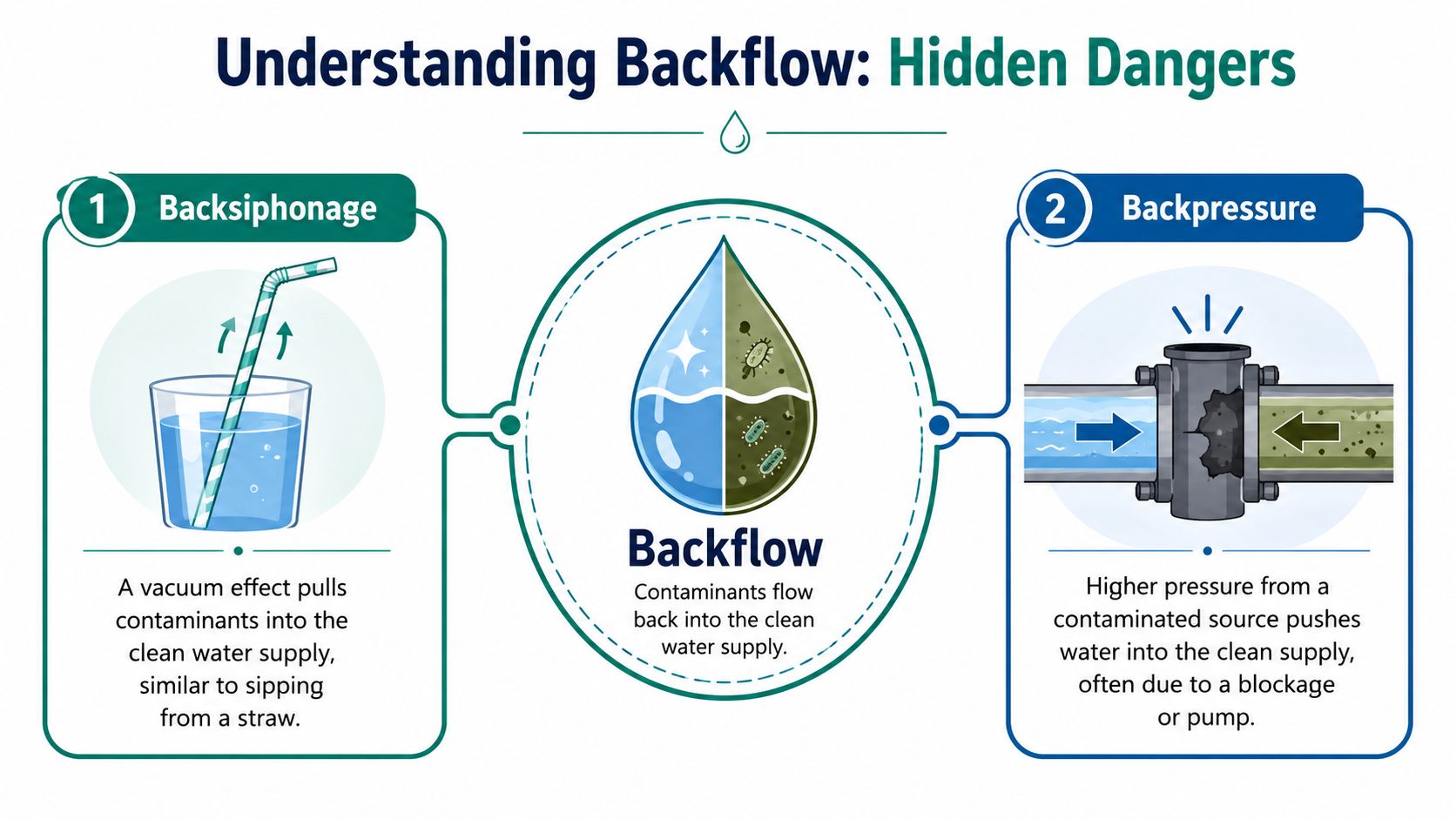
Backsiphonage works like a straw
A straw pulls liquid upward when the pressure inside it drops. Your plumbing can react in a similar way.
If the water main loses pressure during a line break, firefighting demand, or heavy system use, water from connected pipes or hoses on your property can get drawn backward. Plumbers call that backsiphonage. If the end of that hose is sitting in a mop bucket, pet bowl, puddle, or chemically treated water, whatever is touching it can be pulled toward the drinking water line.
That is the health risk homeowners miss. The danger is not only dirty-looking water. It is any water that has touched soap, bacteria, animal waste, fertilizer, or stagnant water.
Backpressure pushes the problem upstream
Backpressure is the other version of the same problem. Instead of a drop in street pressure pulling water backward, something on the property creates enough force to push water the wrong way.
Boilers, pumps, and some heating or irrigation setups can do that. The plumbing stops acting like a one-way street and starts acting like two lanes colliding. Once that happens, non-potable water can move into a line meant for drinking, cooking, bathing, or ice makers.
The risky spots often look harmless
Backflow often catches homeowners off guard because the source usually looks routine, not dramatic. Common examples include:
- Sprinkler heads surrounded by mud, lawn chemicals, or standing water
- Buckets of cleaning solution with a hose left below the water line
- Boiler or hot water connections tied into potable water
- Outdoor hose bibbs used to rinse trash cans, decks, or vehicles
- Secondary water systems or added equipment that create a cross-connection
Water does not need to look dirty to be unsafe. If it touched a non-potable source, it does not belong in a drinking water line.
In Big Bear, the risk can be easier to overlook because mountain properties do not all behave the same way. Elevation changes, long plumbing runs, outdoor irrigation, and seasonal occupancy can all affect pressure. A vacation rental that sits quiet for days and then fills with guests for the weekend puts very different demands on the system. That matters for owners, property managers, and anyone responsible for guest safety.
Local codes and testing rules exist for a public-health reason. Contaminated water can spread illness through a single home or, in the wrong conditions, into a connected water system. The device on the pipe is only part of the story. The primary goal is protecting your family, your renters, and your neighbors.
If you want a clearer picture of how pressure, fixtures, and supply lines work together, these Big Bear plumbing basics for homeowners help connect the day-to-day plumbing side to water safety.
Your Guide to Backflow Prevention Devices
Choosing a backflow device is a lot like choosing the right safety gear for the job. A paper dust mask and a firefighter’s air tank both protect breathing, but they are built for very different risks. Plumbing works the same way. The right device depends on how likely contaminated water is to get pulled or pushed into your drinking water, and how dangerous that contamination would be if it did.
That matters in Big Bear. Pressure can change more than homeowners expect, especially on properties with elevation changes, long exterior runs, irrigation, or periods of vacancy. A cabin that sits quiet all week and then gets a full house of weekend guests can put sudden stress on the system. The device on the pipe is there to protect real people at the sink, shower, and kitchen tap.
Start with the safest method when possible
The simplest protection is often the best. An air gap is just open space between a water outlet and the highest possible water level in the container below it. According to the American Backflow Prevention Association FAQ, an air gap provides the highest theoretical level of backflow protection, and that separation must be at least twice the outlet diameter and never less than 1 inch.
A straw in a drink helps explain why. If the top of the straw stays above the liquid, nothing gets siphoned back through it. If the straw sits submerged, the liquid has a path. An air gap removes that path.
That is why a faucet should end above the sink basin, not down in a bucket, mop sink, or chemical container. No springs. No seals. No internal parts to fail. Just safe separation.
Mechanical devices protect connections that cannot be separated by space
Plenty of plumbing connections cannot use an air gap because the system has to stay closed and pressurized. In those cases, plumbers install a mechanical assembly designed for the level of hazard involved.
A good way to sort them out is to ask two questions. Could water flow backward here? If it did, would it carry a low hazard or a health hazard?
Pressure Vacuum Breaker
A Pressure Vacuum Breaker, or PVB, is common on irrigation systems. It protects against backsiphonage by opening to admit air when supply pressure drops.
That makes it a practical choice for many sprinkler systems, where a sudden drop in pressure could otherwise pull in water from irrigation piping. On a mountain property with outdoor watering and changing demand, that kind of protection matters. But a PVB is built for a specific problem. It is not the right answer for every cross-connection.
Double Check Valve Assembly
A Double Check Valve Assembly, or DC, uses two internal check valves to prevent reverse flow. It is generally used where the hazard is considered lower.
In plain terms, this device is for situations where backward flow is a concern, but the material on the other side is not expected to create the same level of health risk as sewage, chemicals, or other serious contaminants. The key point is matching the device to the actual hazard. Choosing by price alone can leave a family or guest unprotected.
Reduced Pressure Zone Assembly
An RPZ is used where the risk is higher and stronger mechanical protection is needed. It has check valves plus a relief valve that discharges water if the assembly senses a problem internally.
That relief opening is important. It means the device is designed to dump to a safe location instead of letting contaminated water migrate back toward the drinking supply undetected. If you manage a vacation rental, maintain commercial equipment, or have a setup with a higher hazard connection, this is often the kind of protection a plumber or water authority looks for.
Backflow Prevention Device Comparison
| Device Type | How It Works | Protection Level | Common Application |
|---|---|---|---|
| Air Gap | Creates a physical vertical separation between potable water and the receiving vessel | Highest theoretical protection | Sink faucets, fill points, drain connections where separation is practical |
| Pressure Vacuum Breaker | Admits air to stop vacuum conditions from pulling water backward | Good for backsiphonage protection | Residential irrigation systems |
| Double Check Valve Assembly | Uses two internal check valves to stop reverse flow | Lower-risk mechanical protection | Lower-hazard plumbing connections |
| Reduced Pressure Zone Assembly | Uses check valves plus a relief valve to protect against higher-risk reverse flow | Highest mechanical protection | Higher-hazard systems and connections needing stronger safeguards |
For homeowners who want a clearer picture of how supply lines, pressure, and fixtures work together before changing anything, these Big Bear plumbing basics for homeowners can help.
Bottom line: The right device is the one that fits the hazard. Sometimes that means a mechanical assembly. Sometimes the smartest fix is changing the plumbing layout so contaminated water never gets a path back into the line in the first place.
That is the reason backflow work should start with risk, not hardware. The device is the tool. Protecting your family, your guests, and your drinking water is the goal.
Legal Requirements in California and Big Bear
A lot of plumbing rules feel like paperwork until you picture the underlying problem. A hose left in a bucket of cleaner, an irrigation line sitting in dirty soil, or a rental guest using an outdoor spigot the wrong way can create a path for unsafe water to get pulled back into the same system your family drinks from.
That is why California and local water providers treat backflow as a public health issue, not just a plumbing detail.
In simple terms, the law exists because one bad cross-connection can affect more than the fixture where it started. Your home connects to a larger shared water system. If pressure drops in the wrong moment, water can move backward like a straw pulling liquid the opposite direction. The rules are there to stop that from happening before anyone gets sick.
Why local enforcement matters in Big Bear
Big Bear has a few conditions that make this more than a theory. Mountain communities can see pressure changes from elevation, seasonal demand, repairs, and weather-related service interruptions. Homes that sit vacant part of the year, then fill up with guests on a holiday weekend, also tend to put plumbing systems through sudden swings in use.
That matters for vacation rentals in particular.
Guests do not know the history of your plumbing. They may use hose bibs, irrigation, utility sinks, or outdoor fixtures without realizing what is connected to what. If you own a short-term rental, backflow protection is part of protecting the people staying there, along with protecting the public water supply your neighbors rely on.
Situations that often trigger requirements
Properties in Big Bear usually need closer review if they have:
- Irrigation systems tied into the drinking water line
- Fire sprinkler or suppression systems
- Commercial or mixed-use plumbing setups
- Auxiliary water sources, booster equipment, or specialty systems
- Vacation rentals or second homes with irregular occupancy and heavier guest use
The exact requirement depends on the hazard. Lower-risk connections may call for one type of protection. Higher-risk connections may require a stronger assembly, testing, and records. The point is not to check a box. The point is to match the protection to the health risk.
What owners are usually responsible for
For many properties, the owner is responsible for finding any cross-connections, installing the approved protection, and keeping required assemblies tested and documented under the local water program.
A simple way to look at it is this:
- Find where potable water meets anything that could contaminate it.
- Confirm the right protection is installed for that risk.
- Schedule testing when a mechanical assembly requires it.
- Keep records in case your water provider, buyer, or rental file needs them.
If you already suspect a plumbing problem on the property, this guide on how to spot a hidden water leak in your house can help you separate a leak issue from a backflow compliance issue.
Local mindset: Backflow rules protect your household, your guests, and the shared system your neighborhood depends on.
For Big Bear homeowners, especially those managing second homes and short-term rentals, the smartest time to deal with backflow requirements is before a notice arrives, before a device fails, and before questionable water reaches a sink, shower, or ice maker.
Testing Inspection and Signs of Failure
A backflow device is a lot like a seatbelt in your truck. You hope it never has to save you, but you still want to know it works before there is a problem. In Big Bear, that matters even more because pressure can fluctuate with elevation, seasonal occupancy, irrigation use, and winter weather. If a device fails at the wrong time, the concern is not just a plumbing repair. It is the risk of unsafe water reaching your family, your guests, or the shared water system.
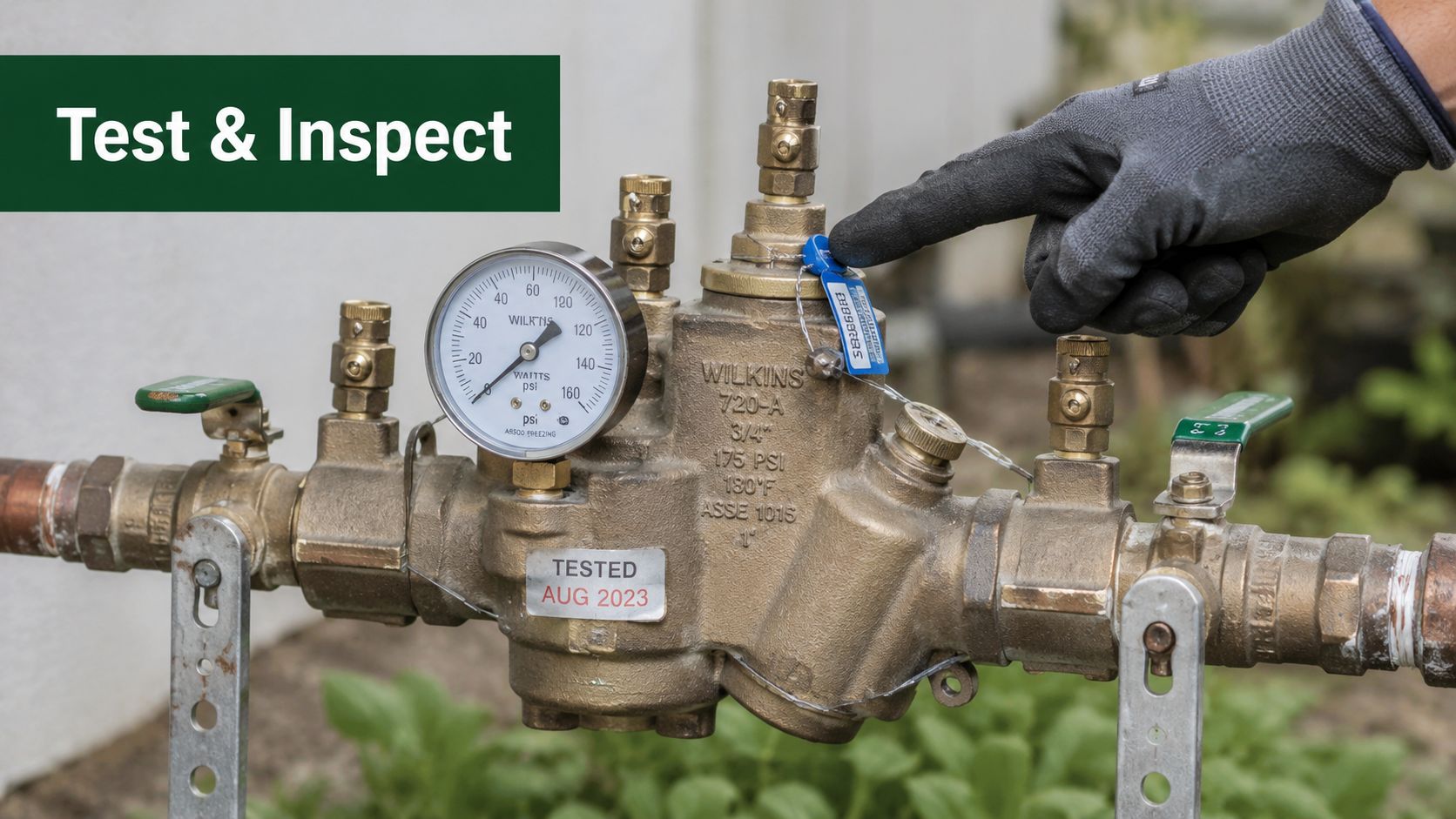
What you can check yourself
You do not need to open test ports or guess at internal parts. A simple walk-by inspection tells you a lot.
Look for:
- Steady dripping or discharge from the assembly
- Rust, corrosion, or cracked fittings
- Discolored or foul-smelling water at a nearby sink, hose bib, or fixture
- Unexpected pressure swings, especially after irrigation runs or water service changes
- Wet soil, puddles, or staining around an outdoor device
Those clues matter because backflow assemblies fail in plain, ordinary ways. Rubber seals wear out. Grit gets trapped where a check valve should close. Freeze damage can split a fitting just enough to create trouble later. If you are also trying to sort out whether the moisture is coming from a plumbing leak somewhere else, this guide on how to spot a hidden water leak in your house can help you narrow it down.
What a certified tester is checking
A certified tester is not just looking for leaks. They are measuring how the device behaves under pressure.
That matters because a backflow preventer can look perfectly normal on the outside and still fail inside. A good comparison is a straw with a tiny crack in it. From the top, the drink looks fine, but the suction does not work the way it should. Backflow assemblies have internal checks, springs, and relief components that must react correctly when pressure changes. If one part sticks or weakens, contaminated water can move the wrong direction.
Why regular testing matters
Regular testing catches problems before they turn into a health issue or a failed inspection. It also helps in places like Big Bear, where outdoor devices may sit through cold snaps, periods of non-use at second homes, and heavy summer irrigation demand.
For vacation rentals, this is easy to overlook. Guests will never know a device is struggling until water pressure acts strangely, a relief valve starts dumping, or a cross-connection problem shows up where it should not. Annual testing and prompt repair reduce that risk and show that the property owner is taking water safety seriously.
Common failure clues that deserve fast attention
Some warning signs should move to the top of your list.
| Sign | What it may mean |
|---|---|
| Water coming from an RPZ relief opening | Internal check failure or an abnormal pressure condition |
| Leaks at shutoff valves, unions, or fittings | Worn seals, corrosion, or freeze damage |
| Sprinklers acting weak after a shutdown or repair | A valve issue, blockage, or pressure problem |
| Water quality concerns in one part of the property | A local plumbing issue or possible cross-connection concern |
One practical Big Bear note. Outdoor backflow assemblies have a harder life here than they do in milder areas. Sun, freezing nights, and long stretches when a cabin sits empty can all shorten the life of seals and valves. A quick inspection now can prevent a much bigger problem later, especially if other people are staying in the home and trusting the water that comes out of the tap.
Understanding Backflow Prevention Costs
Backflow prevention costs are real, but this is one of those plumbing expenses that makes more sense when you frame it correctly. You’re paying for protection of the drinking water, proper testing, and compliance with the local program that applies to your property.
The three cost buckets
Most homeowners run into costs in three categories:
- Annual testing for mechanical assemblies that require certification
- Repairs when seals, internal parts, shutoffs, or fittings fail
- New installation when a property needs a device added or a connection redesigned
The final price depends on the assembly type, size, location, how accessible it is, and whether permits or corrections are needed. An above-ground irrigation device that’s easy to reach is a different job than replacing a more complex assembly in a tight mechanical area.
What affects the total
A few factors move the price up or down:
-
Device type
An RPZ is a more involved assembly than a simpler irrigation vacuum breaker. -
Repair scope
Some jobs only need internal soft parts replaced. Others need shutoff valves, unions, or freeze-damaged sections rebuilt. -
Installation complexity
Labor goes up when a plumber has to rework piping, improve drainage, change elevation, or bring an older setup into compliance.
Backflow prevention is a lot like brakes on a truck. You may not think about them every day, but when they matter, they matter a lot.
Because local pricing changes with labor, permitting, and the exact device involved, it’s better to get a written estimate than rely on generic internet ranges. The smart question isn’t just “What does a backflow preventer cost?” It’s “What does my property need, and what work is required to make it safe?”
Your Big Bear Backflow Prevention Partner
A backflow device can pass inspection and still leave a property exposed if it is installed in the wrong spot, left untested, or allowed to freeze through a Big Bear winter. That is why local experience matters. In the mountains, water pressure can shift, homes may sit vacant for stretches, and vacation rentals often have more turnover and more outdoor water use than a typical full-time residence.

For Big Bear homeowners and property managers, one local option is Bear Valley Plumbing & Heating, which installs and connects backflow prevention devices as part of its plumbing services. That kind of help matters because backflow protection is not just a part swap. It starts with the question, “What could get pulled into the drinking water here?” An irrigation line, a boiler feed, a hose left in a bucket, or a neglected rental setup can all create different levels of risk.
A good plumber should look at the whole cross-connection, the same way you would trace a straw from the cup to your mouth before taking a drink. If the connection is wrong, dirty water can travel the wrong direction when pressure changes.
What good service should include
Whether the job is testing, repair, or a new installation, look for a provider that can handle:
- Cross-connection review so the device fits the actual hazard at the property
- Testing and inspection for assemblies that need certification
- Repair work for leaking shutoffs, failed internal parts, or freeze damage
- Installation updates that make the assembly safer to access, protect, and maintain
- Clear paperwork for your records and any water system requirements
This matters even more for vacation rentals.
Guests use every part of the plumbing system without knowing what is behind the walls or out by the irrigation valves. They trust that the water from the kitchen tap, shower, ice maker, and outdoor spigot is clean. Backflow protection helps keep that trust from turning into a health problem.
If you need help with backflow prevention, testing, repairs, or a new device installation, contact Bear Valley Plumbing & Heating to schedule service and get clear guidance for your Big Bear home or vacation rental.
If you are looking for a Big Bear plumbing, heating & air conditioning contractor, please call (909) 584-4376 or complete our online request form.
Category: Plumbing Replacement
